Showing posts with label vintage. Show all posts

Thursday, October 31, 2013

Ghost Photography of the 19th Century


Photo manipulation is nearly as old as photography itself, and what early photographers lacked in Photoshop, they made up for in ingenuity. Photographers identified nine different methods that could aid in the photographic imitation of “spirits”, including techniques like multiple exposure and combination printing. As David Brewster, in his 1856 book on the stereoscope, explained: 
For the purpose of amusement, the photographer might carry us even into the regions of the supernatural. His art, as I have elsewhere shewn, enables him to give a spiritual appearance to one or more of his figures, and to exhibit them as ‘thin air’ amid the solid realities of the stereoscopic picture.


William Mumler was the world’s first known “spirit photographer”. He photographed people who were morning the loss of a loved one and would superimpose their image on the photograph to show that they were still with them in spirit.
Mumler got caught with his fraudulent photography because of P.T. Barnum. He had captured an image of Barnum posed next to a ghost of an exceptionally notable variety: that of the recently assassinated Abraham Lincoln.
 During Mumler’s 1869 hearing for fraud, Barnum was called to the witness stand to testify against Mumler. Barnum would serve as an expert on “humbuggery.”
Spirit photography lived on well into the 20th century, fueled in part by the Civil War and, later on, by World War I. In the U.K., in the aftermath of the first Great War, the spirit photographer William Hope would develop a following for his work that included Arthur Conan Doyle. The Sherlock Holmes’s creator supported Hope against claims of Mumlerian fraud and wrote a book called The Case for Spirit Photography in 1922. He would also end his friendship with the famous Harry Houdini when the magician publicly claimed that spirit photography was “farcical.”
(Source: The Atlantic)

Monday, July 8, 2013

Top Posts for Curious History!

Curious History’s (odditiesoflife) Top Ten Posts for June, 2013

The following links will take you to the most popular posts for the month of June. Curious History had an excellent month. Or come and see what is new at Curious History.com!
  1. Devil’s Bridge - 61,675  Reblogs & Likes
  2. The Astonishing Annual Red Crab Migration - 41,517
  3. Abandoned Enchantment - 29,153
  4. Montaña Mágica Lodge (Magic Mountain Lodge) - 28,095
  5. Dreams in Blue - 23,927
  6. Mount Roraima - 21,280
  7. Abandoned (Haunted) Hotel in Colombia - 15,954
  8. Living Plant Sculptures - 13,044
  9. Moving Through Color - 12,157
                1. The Ancient Ones: Oldest Living Organisms - 10,361

Thursday, November 15, 2012

Kaikidan Ekotoba


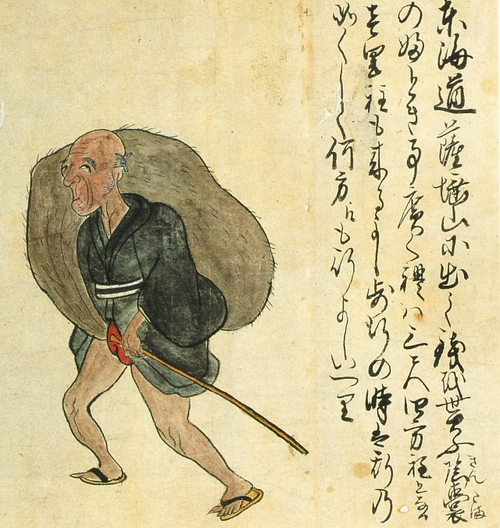
The Kaikidan Ekotoba is a mysterious handscroll that profiles 33 legendary monsters and human oddities, mostly from the Kyushu region of Japan (with several from overseas). The cartoonish document, whose author is unknown, is believed to date from the mid-19th century. 

The above image tells a tale of a man with massive testicles who reportedly made a living as a sideshow attraction at Mt. Satta, on the old Tokaido Road near the city of Shizuoka. His scrotum is said to have measured about a meter across.

Sunday, October 21, 2012

Curious History: The Life of Millie and Christine McKay

Millie and Christine McKoy were born, joined at the base of the spine, on July 11, 1851, the eighth and ninth child of Monimia and Jacob McKay, slaves owned by a blacksmith in the small town of Welches Creek, North Carolina. At only ten months old, they were sold along with their mother to a showman, who in turn sold them on to two more men in the same trade, looking to make a quick buck. It seems to have been around this time that their last name was changed to McKoy.
While still very young, the McKoy twins were kidnapped at an exhibition in New Orleans by yet another showman, who exhibited them another year, including at Barnum’s American Museum. Sold yet again in 1855, this time to a professor, they ended up in Canada, and then Europe, where former owner Joseph Smith reunited them with their mother and brought them back to the United States.
Joseph Smith and his wife educated the McKoy twins, focusing on music and languages. The girls had a gift for singing and could soon also speak in four or five different tongues. Yet, while to some extent it is true that the sisters enjoyed a successful career in museums and the circus, it should not be forgotten that they were also exploited since they were young girls – and, as female slaves, more so even than the other conjoined twins listed here. Indeed, they are held to have been overworked, beaten, raped and sexually abused – including, it’s suggested, during the numerous medical ‘examinations’ they had to endure.
Free at last following the Emancipation Proclamation, in the 1880s the McKoy sisters retired from show business and went back to their hometown in North Carolina, where they bought a small farm. However, after a fire that weakened their health, the twins’ lives were claimed by tuberculosis, contracted by Millie, and died on October 8, 1912. They lived until the ripe old age of 61, the oldest female conjoined twins to date.

Wednesday, October 17, 2012

Curious History: The Origins and History of All Hallow’s Eve (Halloween)


Halloween’s origins date back more than 2,000 years. On what we consider November 1, Europe’s Celtic peoples celebrated their New Year’s Day, called Samhain (SAH-win). According to Irish mythology, Samhain was a time when the ‘door’ to the Otherworld opened enough for fairies and the dead to communicate with us; Samhain was essentially a festival for the dead.
On Samhain eve—what we know as Halloween—spirits were thought to walk the Earth as they traveled to the afterlife. Fairies, demons, and other creatures were also said to be abroad. It is still the custom in some areas to set a place at the Samhain feast for the souls of dead kinfolk and to tell tales of one’s forebears. However, the souls of thankful kin could return to bestow blessings just as easily as that of a murdered person could return to wreak revenge. Fairies were also thought to steal humans on Samhain and fairy mounds were to be avoided.
People stayed near to home or, if forced to walk in the darkness, turned their clothing inside-out or carried iron or salt to keep the fairies at bay. The Gaelic custom of wearing costumes and masks was a bid to befuddle the harmful spirits or ward them off. In Scotland, young men would dress in white with masked, veiled or blackened faces. They were known as ‘guisers’ and the practice was common in the 16th century in the Scottish countryside. Candle lanterns, carved from turnips, were part of the traditional festival. Large turnips were hollowed out, carved with faces and set on windowsills to ward off evil spirits.
Samhain was later transformed as Christian leaders co-opted pagan holidays. In the seventh century Pope Boniface IV decreed November 1 All Saints’ Day, or All Hallows’ Day. The night before Samhain continued to be observed with bonfires, costumes, and parades, though under a new name: All Hallows’ Eve—later “Halloween.”
Children going door to door ‘guising’ or ‘galoshin’ in costumes and masks, carrying turnip lanterns, offering entertainment of in return for food or coins, was traditional in the 19th century and continued well into the 20th century. At the time of mass transatlantic Irish and Scottish immigration, the custom of Halloween in North America began.

Saturday, October 13, 2012

Thursday, October 11, 2012

Curious History: Monowheel Motorcycle, 1930s

While not necessarily a masterful design, Italian M. Goventosa’s 1930s single-wheeled motorcycle is certainly a testament to human imagination.

Wednesday, October 10, 2012

Curious History: “And of Course Henry the Horse Dances the Waltz!"


  This is a reproduction of the poster that inspired John Lennon to write the song, Being for the Benefit of Mr. Kite!, which appeared on The Beatles’ 1967 album Sgt. Pepper’s Lonely Hearts Club Band. It is printed in a limited edition of 1,967.
Lennon bought the poster in an antique shop and hung it in his music room. While writing for Sgt. Pepper one day, he drew inspiration from the quirky, old-fashioned language and set the words to music. The Henderson’s will dance and sing, as Mr. Kite flies through the ring, don’t be late!

Curious History: Peculiar Pistols from the Past


  Pepperbox pistols were first used in the 1500s. The unusual gun features multiple rotating barrels numbering between four and twenty four. Although they were sometimes made of one continuous piece, the barrels were often all made of separate pieces and individually removable for easy maintenance. The earliest models of this type of gun did not rotate automatically after each shot; the barrel assembly had to be rotated by hand to move the next pre-loaded barrel into position. The pepperbox pistol was the predecessor to today’s revolver, only instead of a moving cylinder these weird pistols used rotating barrels to shoot one bullet at a time. 

  Duckfoot pistols are even more bizarre looking, featuring multiple barrels designed to shoot all at the same time. The spread-out barrels are meant to strike multiple targets or adversaries at once. They were often used in situations where one person might be up against several enemies simultaneously, such as in the case of prison guards or sailors.
  
  Despite looking totally awesome, the duckfoot pistol and pepperbox pistol both faded into obscurity around the time more sophisticated handguns were invented.

Tuesday, October 9, 2012

Curious History: A New "Thing" for the Addams Family

Addams Family’s Thing Recreated

Known as the Magnanimous and Beneficent Doctor Warthan, he claims to “disseminate the propaganda of SteamPunk Art.” He built his Thing for an Addams Family themed exhibition at the Wootini Gallery in Carrboro, North Carolina.

Sunday, October 7, 2012

Vintage Photo of a Dressed Cat

The odd fact about this picture is not that the poor kitty had to wear a dress and bonnet.  The cat can't mind because he is...well, has already been through the process of taxidermy.  Did they just use the head?  Very disturbing.